Start with a business outcome
Before choosing colors or a layout, decide what the website must accomplish. A service business may want qualified enquiries; a retailer may need online sales; a local company may need calls and directions. Pick one primary action and a few supporting actions so each page has a purpose.
Describe the people you want to reach and the questions they ask before contacting you. What problem do they have, what would make them trust you, and what information do they need to decide? These answers guide content, navigation, and design.
Map the pages customers need
Most business websites need a concise homepage, focused service or product pages, an About page, proof of work, and an easy contact route. A FAQ can answer objections; case studies can show your process and outcomes. Give each important service its own useful page instead of hiding everything in one long homepage.
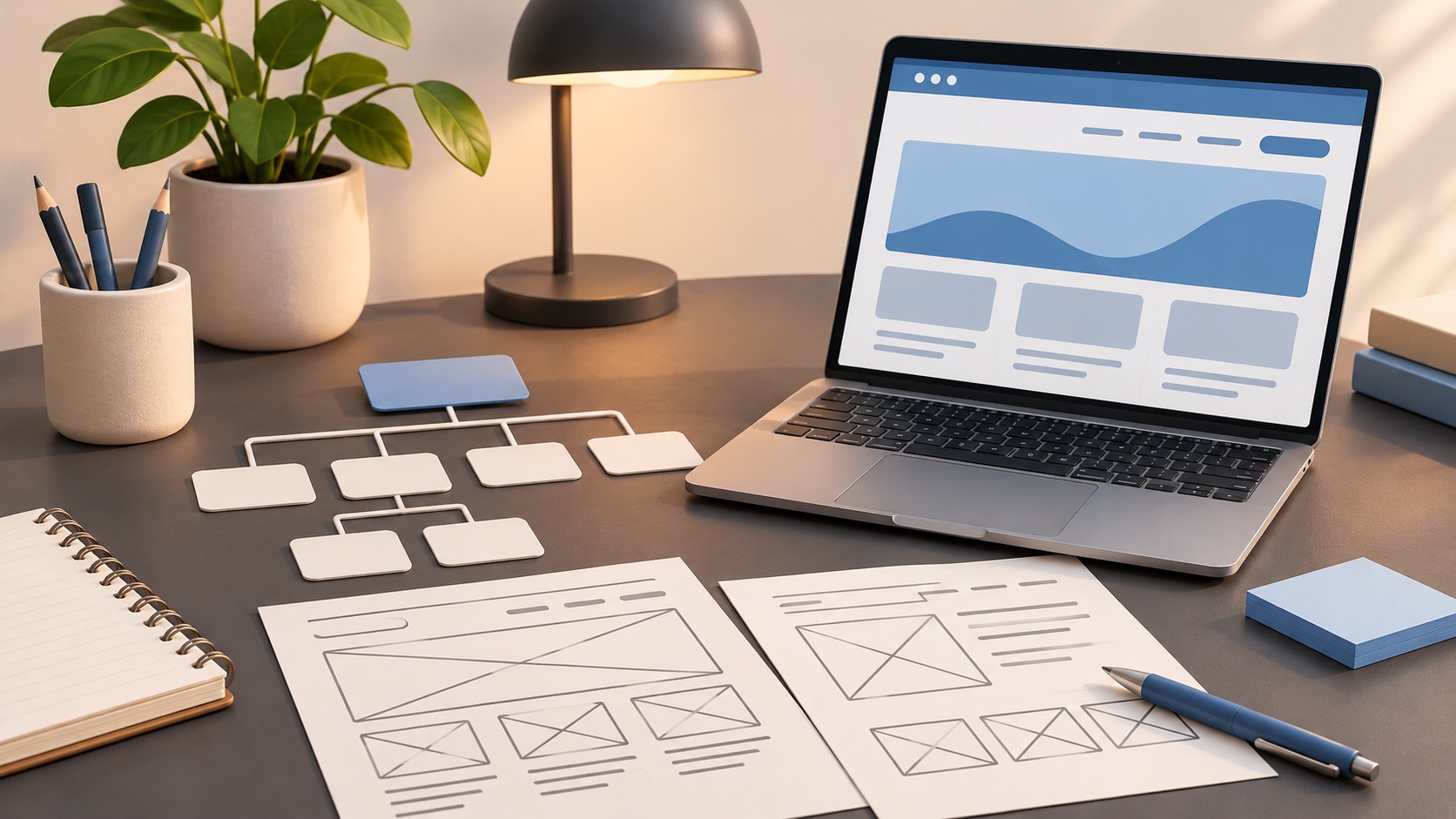
Sketch a simple sitemap and the path from discovery to action. Visitors should understand where they are, what you offer, and how to take the next step without hunting through menus. Write draft headings and calls to action early; content is part of the structure.
Choose features by priority
List requirements separately from future ideas. A contact form, booking flow, catalog, payments, multilingual content, or customer portal may be valuable, but each adds work to build and maintain. Start with the features that support your current goal and leave room to expand.
Decide who will update the site, where it will be hosted, and which information must be collected. Plan for accessibility, privacy, security, analytics, and search visibility from the beginning. Clear ownership avoids surprises after launch.
Questions to answer before development
What budget and timeline make sense? Both depend on the number of pages, content readiness, integrations, and review cycles. Ask for a proposal that states what is included and who supplies copy, images, and approvals.
Should content wait until the design is finished? No. Drafting the main messages and page structure early helps the design support real information instead of placeholder text.
Build, test, then improve
Review the design on phones and desktops. Test menus, forms, links, readability, loading behavior, and the full enquiry or purchase path. Give pages descriptive titles, logical headings, and useful copy that matches what customers search for.
Launch with accurate content and a way to measure the primary goal. Then review search queries, page visits, enquiries, and customer feedback. A strong website is improved through small, informed updates rather than treated as finished on launch day. Loop can help plan, design, develop, host, and support a website around your business goals. Tell us about your project at https://loop.md/en#contact.